
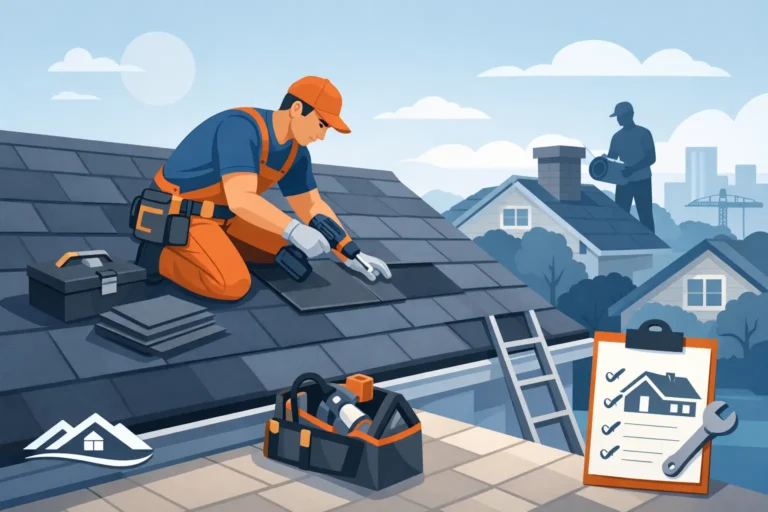
A roof problem rarely starts as a dramatic emergency. More often, it shows up as a small water stain on the ceiling, a few shingles in the yard after a windstorm, or a draft you notice when the weather turns. If you are wondering how to get roof repaired without wasting time, money, or peace of mind, the key is to move quickly and choose the process carefully.
In a coastal climate, roof damage can escalate faster than many homeowners expect. Wind-driven rain, freeze-thaw cycles, salt air, and aging materials all put stress on a roofing system. A minor issue that looks cosmetic from the ground can turn into soaked insulation, wood rot, mold growth, or interior damage if it is left alone too long.
How to get roof repaired without guesswork
The first step is not climbing onto the roof with a tube of caulk. It is identifying the signs of trouble and getting a professional assessment. Homeowners often try to judge the scope of damage from the ground, but roofing problems are not always visible from one angle. What looks like a simple missing shingle can involve lifted surrounding shingles, damaged underlayment, or flashing failure around a vent, skylight, or chimney.
If you suspect damage, start by documenting what you can see safely from the ground or from inside the home. Take photos of missing shingles, sagging areas, dark streaks, ceiling stains, active drips, or granules collecting in gutters. If the issue appeared after a storm, make note of the date and weather conditions. This helps if insurance becomes part of the process.
Then schedule a roof inspection with a qualified local contractor. A proper inspection should do more than confirm that there is a leak. It should identify where water is entering, whether the damage is isolated or widespread, and whether a repair will solve the problem or simply delay a larger replacement.
What a good roof repair process looks like
A reliable roof repair process is clear from the start. You should expect an on-site inspection, a plain-language explanation of the issue, a written estimate, and a defined scope of work. If a contractor is vague about materials, timeline, or warranty coverage, that is usually a sign to slow down.
Good contractors also distinguish between emergency mitigation and full repair. If your roof is actively leaking, a temporary tarp or protective patch may be needed right away to prevent interior damage. That is useful in the moment, but it is not the same as a finished repair. The permanent work should address the root cause, not just cover the symptom.
This is where experience matters. Roof systems are layered, and the visible roofing material is only one part of the assembly. Flashing, ventilation, decking, underlayment, and fastener placement all affect whether a repair holds up over time. A patch done without addressing the surrounding system can fail quickly, especially in high wind and driving rain.
When a repair makes sense and when it does not
One of the most common concerns homeowners have is whether they really need a repair or whether they are being pushed toward a full replacement. The honest answer is that it depends on the age of the roof, the extent of the damage, and the condition of the surrounding materials.
A repair often makes sense when the problem is isolated. That could mean a few shingles torn off in a storm, flashing damage around a penetration, a small leak tied to one section, or wear in a limited area on a roof that still has useful life left. In these cases, a targeted repair can be practical and cost-effective.
A repair may not be the right long-term answer if the roof is near the end of its service life, if leaks are showing up in multiple areas, or if the decking and structural components are compromised. Repeated patchwork on an aging roof can become more expensive than dealing with the larger issue once. A trustworthy contractor should explain that trade-off clearly.
How to choose the right roofing contractor
If you want to know how to get roof repaired well, contractor selection is the biggest decision in the process. Price matters, but roofing is not a service where the lowest number automatically saves money. Poor workmanship can create hidden problems that cost far more later.
Look for a contractor who is licensed where required, fully insured, and experienced with your roofing type. Ask whether the crew is trained on the manufacturer systems they install and whether the company offers workmanship protection in writing. Certification can also matter. A manufacturer-backed credential usually signals that the contractor has met standards for training, installation practices, and business reliability.
You should also pay attention to how the company communicates. Do they answer questions directly? Do they explain what they found and what they recommend in language that makes sense? Do they provide written documentation? The right contractor makes the process feel more certain, not more confusing.
For homeowners in the Halifax area, local knowledge is especially valuable. A roofer who regularly works in coastal conditions understands the pressure that wind, moisture, and seasonal temperature swings put on materials. That affects how repairs should be approached and what products are best suited for long-term performance.
Questions worth asking before the work starts
Before approving a repair, ask what caused the issue, what exactly will be replaced or repaired, and whether any hidden damage could change the scope once work begins. Ask what materials will be used and whether they are designed to match your existing roof as closely as possible.
You should also ask about warranty coverage. Some repairs carry limited workmanship warranties, while others may affect the remaining coverage on your roofing system depending on the age and condition of the roof. If premium materials or manufacturer-backed systems are involved, make sure you understand what protection applies after the repair is complete.
Timing is another practical question. Some roof repairs can be done quickly, while others may depend on weather, material availability, or the need for additional carpentry if the decking is damaged. A professional contractor should be able to give you a realistic timeline, not just the answer you want to hear.
Insurance, storm damage, and documentation
If the damage was caused by wind or another sudden event, your homeowner’s insurance policy may come into play. That does not mean every roof issue qualifies. Insurers generally distinguish between sudden storm damage and wear from age or lack of maintenance.
That is one reason documentation matters. Photos, inspection notes, and a contractor’s assessment can help clarify what happened and when. If you plan to file a claim, do not wait too long. Delays can make it harder to show that the damage was tied to a specific event.
A reputable roofing contractor can often help you understand what they are seeing and provide the documentation needed for your records. They should not promise claim approval, but they can support a more organized and transparent process.
Why quick fixes often create bigger problems
Many homeowners are tempted by fast, low-cost repair offers after a storm. The problem is that rushed repairs are often surface-level. They may stop water temporarily while leaving the underlying issue in place.
This is especially true when sealants are used as a substitute for proper roofing work. Sealant has a place in some repair situations, but it is not a cure-all. If flashing is installed incorrectly, shingles are brittle and failing, or underlayment has been compromised, adding more sealant is just buying time.
A lasting repair depends on diagnosis, not guesswork. That is why experienced roofers inspect the full area around the visible problem instead of only patching the exact spot where water shows up indoors. Water can travel before it becomes visible, and the leak you see is not always directly below the failure.
What peace of mind should look like after the repair
Once the work is complete, you should receive clear documentation of what was done. That may include photos, material details, warranty information, and any recommendations for future maintenance. If a contractor finishes the job and leaves you with unanswered questions, that is not a strong service experience.
The better outcome is confidence. You know what failed, why it was repaired the way it was, and what to watch for going forward. That kind of clarity matters just as much as the shingles themselves.
At Companion Roofing, that standard matters because homeowners are not just paying for a patch. They are trusting someone to protect one of the most important parts of their home. When roof repair is handled with craftsmanship, transparency, and the right materials, it does more than stop a leak. It restores confidence in the roof over your head.
If your roof is showing signs of trouble, the smartest next step is not to wait for the stain to grow or the next storm to test it. Get it inspected, get honest answers, and get the repair done right.