
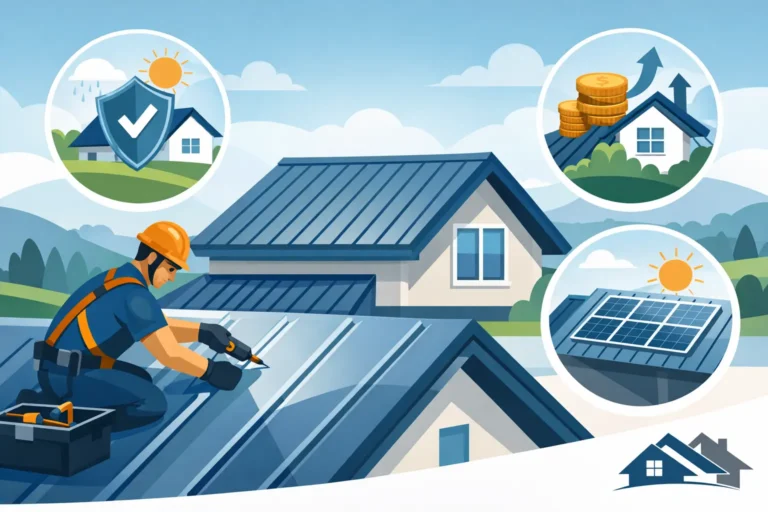
When a roof has to stand up to salt air, wind, heavy rain, and freeze-thaw cycles, material choice matters. That is why many homeowners looking at the benefits of metal roof installation are not just thinking about appearance – they are thinking about lifespan, maintenance, and whether the roof will keep performing years from now.
Metal roofing has moved well beyond the old idea of exposed fasteners and strictly industrial looks. Modern residential systems can deliver a clean, finished appearance while offering serious long-term value. For property owners who want durability and predictability, metal is often worth a closer look.
Why the benefits of metal roof installation stand out
The biggest advantage of metal roofing is longevity. A properly installed metal roof can last decades, often significantly longer than many traditional roofing materials. That does not mean every metal roof performs the same way, because panel type, coating quality, underlayment, ventilation, and installation standards all play a major role. Still, when homeowners want a roof built for the long haul, metal usually enters the conversation for good reason.
That long service life can change the math of a roofing investment. A lower upfront price can be appealing, but if a roof needs replacement sooner or requires more upkeep along the way, the true cost rises over time. Metal roofing often appeals to owners who would rather invest once in a system designed for dependable performance.
Strong weather performance matters
In coastal and storm-prone areas, weather resistance is not a bonus feature. It is the job. One of the clearest benefits of metal roof installation is how well these systems can perform under demanding conditions when they are selected and installed correctly.
Metal roofs are known for shedding rain and snow efficiently. Because the surface is hard and panels are designed to move water off the roof quickly, there is less opportunity for standing moisture to sit where it should not. That can be especially valuable in climates where repeated storms and winter conditions test every weak point in a roofing system.
Wind resistance is another major reason property owners consider metal. Many modern systems are engineered with performance standards that help them resist uplift better than people expect. That said, the result depends heavily on installation quality. Even a premium roof can underperform if trim, flashings, fastening patterns, and transitions are not handled with care.
Fire resistance also adds peace of mind. While no roofing material makes a home fireproof, metal is noncombustible, which can be an important factor for homeowners evaluating overall property protection.
Metal roofing can reduce maintenance headaches
A roof that needs constant attention does not stay affordable for long. One practical benefit of metal roofing is that it typically demands less routine maintenance than materials that are more vulnerable to cracking, curling, or moisture-related wear.
That does not mean maintenance drops to zero. Roof inspections still matter, especially after major storms. Sealants, flashings, fasteners, and penetrations all need periodic review. Gutters need to stay clear. Debris should not be left to collect in valleys or around roof features. But in general, a well-installed metal roof is often chosen by homeowners who want fewer ongoing concerns.
This is especially important for owners managing older homes or multiple properties. Reducing the number of repairs, emergency calls, and seasonal worries can be just as valuable as extending the roof’s lifespan.
Energy efficiency is part of the value
Metal roofs can also support better energy performance, especially when paired with proper insulation and attic ventilation. Reflective coatings and finishes can help reduce heat absorption, which may lower cooling demands during warmer months.
Energy savings are often discussed as a headline benefit, but this is one of those areas where expectations should stay realistic. The amount you save depends on the roof color, the product chosen, your home’s insulation levels, ventilation design, and local weather patterns. A metal roof is not a cure-all for high energy bills, but it can be a meaningful part of a more efficient building envelope.
For homeowners planning a full roof replacement, this is worth thinking about early. The roofing material, ventilation strategy, and installation details should work together, not as separate decisions.
Appearance has improved more than many homeowners expect
Some homeowners hesitate because they still picture an agricultural or commercial roof profile. In practice, today’s residential metal roofing options are far more versatile. There are standing seam profiles, textured finishes, and color options that suit everything from traditional homes to newer builds.
Curb appeal matters, especially if you plan to stay in your home for years or want to protect resale value. A metal roof can give a home a crisp, well-maintained look that lasts. Coating quality is important here because long-term appearance depends on more than color alone. Fade resistance, chalk resistance, and corrosion protection all affect how the roof looks as it ages.
This is another area where product quality and installation experience matter. A good roof should not just perform well from the street. It should look finished at the edges, transitions, and details that people notice once the job is complete.
Lightweight material, serious protection
Metal roofing offers strong protection without the heavy load associated with some other roofing products. That lighter weight can be beneficial from a structural standpoint, particularly when a property owner is evaluating replacement options for an older home.
A lighter roofing system may also simplify aspects of installation planning, although each home still needs to be assessed individually. Roof geometry, decking condition, ventilation, and existing structural issues all need to be reviewed before final recommendations are made.
This is why experienced assessment matters. The right roof is not just the one with the best brochure. It is the one that fits the structure, the climate, and the homeowner’s goals.
The trade-off: higher upfront cost
If there is one reason some homeowners hesitate, it is the initial price. Metal roofing generally costs more upfront than many asphalt systems. For budget-focused projects, that can be a real obstacle.
The better question is whether the higher first cost is justified by longer life, lower maintenance, improved durability, and possible energy benefits. For some households, the answer is clearly yes. For others, especially if the home may be sold soon or the budget is tight, another roofing system may make more sense.
This is where honest guidance matters. A good contractor should explain both the advantages and the limitations, not push one material for every house. Metal is an excellent option, but it is still an option, not a one-size-fits-all answer.
Installation quality is what makes the system work
A metal roof is only as reliable as the workmanship behind it. Panel alignment, flashing details, underlayment selection, ventilation planning, and fastening methods all affect performance. Small mistakes at valleys, penetrations, chimneys, skylights, or wall transitions can lead to big problems later.
That is why contractor selection matters as much as material selection. Homeowners should look for a company that is insured, experienced, and clear about its process from inspection through installation. Manufacturer-backed systems and warranty options can also add confidence, especially when the installer meets recognized certification standards.
For homeowners in the Halifax area, Companion Roofing works with that long-term mindset. The goal is not just to put on a roof that looks good on day one, but to install a system that performs the way it should through real weather and real seasons.
Is metal roofing the right choice for your property?
If your priorities are long-term durability, lower maintenance, strong weather performance, and a clean finished look, metal roofing deserves serious consideration. It is especially appealing for homeowners who plan to stay put and want to invest in protection they can count on.
Still, the right answer depends on your home, your budget, and the condition of the existing roof structure. Some properties are ideal candidates. Others may need repairs, ventilation upgrades, or a different roofing approach to deliver the best value.
The smartest next step is not guessing from photos or price ranges online. It is getting a professional roof assessment, asking clear questions, and making a decision based on how the system will perform on your home. A roof is too important to choose on material alone. The best result comes from matching the right product with the right installation team.