
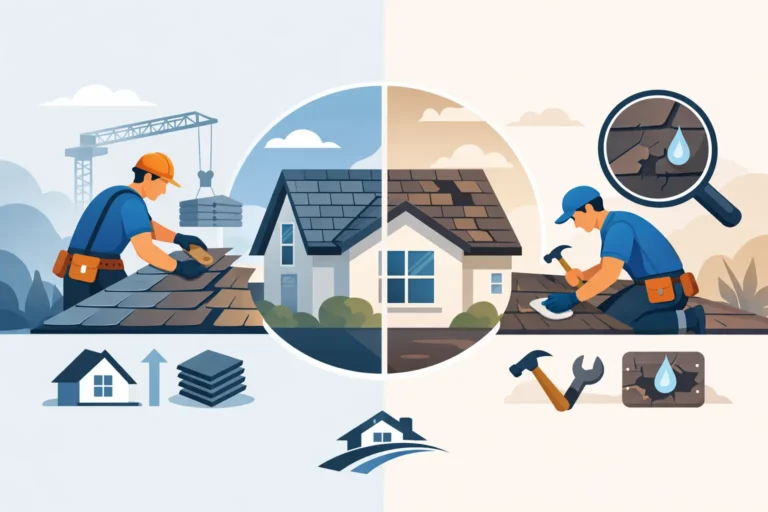
A roof problem rarely shows up at a convenient time. Maybe you noticed a water stain after a hard rain, found shingles in the yard after a windstorm, or learned during a home inspection that your roof has seen better days. That is usually when the real question starts: roof replacement vs repair – which option actually makes the most sense for your home?
The answer depends on more than the leak you can see from inside. A roof is a system, not just a layer of shingles. The right decision comes from looking at the roof’s age, the extent of damage, ventilation, underlayment, flashing, and how much useful life is realistically left. A cheaper short-term fix is not always the better value, and a full replacement is not always necessary just because a roof looks worn from the ground.
Roof replacement vs repair starts with the age of the roof
Age matters because roofing materials have a service life, even when they have been maintained well. If your asphalt shingle roof is relatively new and the issue is limited to one area, repair is often the practical choice. A section of lifted shingles, damaged flashing around a chimney, or a localized leak can often be corrected without replacing the entire system.
If the roof is already near the end of its expected lifespan, the conversation changes. Repairs may stop the immediate problem, but they do not reset the clock. Homeowners sometimes spend money patching an older roof for a year or two, only to replace it soon after. In that situation, the repair can feel like paying twice.
For homes in coastal conditions, age can show itself faster. Wind, moisture, salt air, and freeze-thaw cycles can wear materials down in ways that are not always obvious from the driveway. A roof may still be shedding water today while quietly developing weak points that make repeated repairs more likely.
When a roof repair is usually the right call
Repair makes sense when the damage is isolated and the rest of the roof is in solid condition. That might mean a small leak caused by cracked pipe flashing, a few shingles damaged by wind, or minor storm impact that has not affected the broader system.
A good repair is not just a patch over symptoms. It should address the reason the problem started. If flashing failed, the flashing should be replaced properly. If water got in because of poor sealing around a penetration, that detail needs to be corrected with care. If a repair only covers over the visible damage without fixing the source, the problem often returns.
Repair is also worth considering when the roof still has meaningful life left and matching materials are available. On a newer roof, a targeted repair can preserve the system and control costs without compromising performance. For many homeowners, that is the most sensible route.
There is one catch. Not every repair blends in well. If your shingles are older, faded, or discontinued, the repaired area may stand out visually even if the work itself is sound. For some property owners that is a minor issue. For others, especially before a sale or after visible storm damage, appearance matters too.
Signs repair may be enough
A roof often can be repaired when the leak is limited to one area, the decking underneath is still sound, and there are no widespread signs of shingle failure. If granule loss is modest, flashing issues are localized, and the roof is otherwise performing well, replacement may be more than you need right now.
That is why inspection matters. Surface symptoms can point in one direction while the actual condition tells a different story.
When roof replacement becomes the smarter investment
Replacement is usually the better option when problems are widespread, recurring, or tied to the roof’s overall age and condition. If leaks are showing up in multiple places, shingles are curling or breaking down across large sections, or repairs have become a regular expense, a new roof often delivers better long-term value.
This is especially true when hidden components are involved. Water intrusion can affect underlayment, decking, ventilation performance, and flashing details. If a contractor keeps finding issues beyond the original repair area, that is often a sign the system is failing more broadly.
A full replacement also makes sense when you want a stronger warranty position and a more predictable result. Properly installed manufacturer-backed roofing systems give homeowners more than fresh shingles. They provide a coordinated system designed to perform together, along with clearer protection for materials and workmanship.
For many homeowners, replacement is not just about fixing what is wrong today. It is about reducing the chance of emergency calls, interior damage, and repeated repair bills over the next several years.
Cost is important, but value matters more
It is natural to compare the lower price of a repair with the larger investment of a replacement. The part that gets missed is how long each option is expected to last and what risks remain after the work is done.
A repair costs less upfront, but it only makes financial sense if it solves the problem for a reasonable period of time. If the roof needs another repair next season, or if unseen deterioration leads to interior water damage, the low initial price may stop looking like savings.
A replacement costs more because it addresses the whole system. That includes tear-off, inspection of the roof deck, replacement of worn components, and installation of a new roofing assembly. While the upfront price is higher, the long-term cost per year of service can be lower than repeatedly patching an aging roof.
Homeowners should also think about secondary costs. Water damage to insulation, ceilings, framing, or stored belongings can add up quickly. Delaying the right roofing decision sometimes creates a bigger repair inside the home.
The biggest factors that tip the decision
The best roof decisions are usually based on a few core factors working together rather than one issue in isolation. The age of the roof is one. The spread and severity of damage is another. Past repair history matters too. A roof with one first-time problem is very different from a roof that has already needed several fixes.
Ventilation and installation quality also play a major role. Sometimes the visible problem is only part of the story. If the original roof was installed poorly or the attic is not ventilating properly, a repair may only buy time. In that case, replacement allows those underlying issues to be corrected instead of covered over.
Insurance can also influence the path forward, especially after storm damage. Depending on the source and extent of damage, a repair may be approved in one situation while replacement may be warranted in another. Clear documentation and a thorough inspection are important here.
Why a professional inspection matters in roof replacement vs repair
This is one of those decisions where guessing gets expensive. What looks like a simple leak may be a flashing issue, a ventilation problem, storm damage, or hidden deck deterioration. What looks like an old roof from the street may still have reliable service life left if the system is otherwise sound.
A proper inspection should go beyond a quick glance. It should look at shingle condition, exposed components, vulnerable penetrations, signs of moisture entry, and the overall integrity of the roofing system. That gives you a clearer recommendation based on condition rather than assumption.
For homeowners who value workmanship, documentation, and long-term protection, this is also where contractor choice matters. Certified, insured professionals have more at stake than simply making a sale. They are expected to diagnose accurately, install to manufacturer standards, and stand behind the work. That level of accountability matters whether the right answer is a modest repair or a full replacement.
Companion Roofing works with homeowners who want that clarity before making a major decision, especially when coastal weather has already put a roof to the test.
Choose the option that fits the roof, not just the budget
Some roofs need a focused repair and nothing more. Others are already telling you, in a dozen small ways, that their useful life is running out. The key is not to chase the cheapest answer or assume the biggest project is always best. It is to choose the option that gives your home dependable protection, realistic value, and fewer surprises after the next heavy rain.
If you are weighing roof problems right now, the most useful next step is a careful assessment from a qualified local roofer who will tell you what the roof actually needs. A good decision today should leave you with more confidence, not more guesswork.