
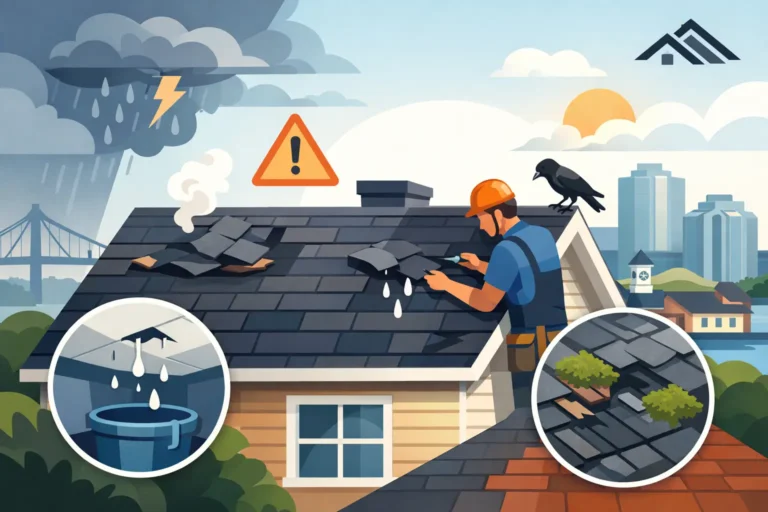
A roof leak rarely starts with a dramatic ceiling collapse. More often, it begins as a faint water stain near an exterior wall, a shingle lifted by a coastal windstorm, or a small patch of granules collecting in the gutter. Prompt roof repair is how homeowners stop those early warnings from becoming damaged insulation, rotted roof decking, mold concerns, and expensive interior repairs.
In Halifax Regional Municipality, roofs face more than ordinary wear. Wind-driven rain, freeze-thaw cycles, heavy snow, ice buildup, and salty coastal air can all shorten the life of roofing materials when small defects are left unaddressed. Knowing what to watch for helps you make a clear decision before the next storm makes the problem worse.
Roof Repair Problems That Need Attention
Some roof issues are visible from the ground. Others show up indoors long after water has entered the roofing system. A careful visual check after a major storm can help, but do not climb onto a wet, steep, or snow-covered roof. The safest approach is to look for warning signs from the ground and inside the attic, then arrange a professional inspection when something does not look right.
Missing, cracked, curled, or loose shingles are common signs of wind damage and aging. A few damaged shingles may be repairable if the surrounding roof is in good condition and matching material is available. When damage is widespread, however, isolated repairs may only delay a larger replacement decision.
Water stains on ceilings or walls deserve quick attention, even if they appear dry. The point where water appears indoors is not always where it entered the roof. Moisture can travel along framing, insulation, or wiring before it becomes visible, which is why a proper diagnosis matters more than simply patching the stain.
Other signs include shingle granules in gutters, sagging roof areas, loose flashing around chimneys or vent pipes, damaged soffits, and persistent moisture or musty odors in the attic. Ice dams along the roof edge can also force melting snow beneath shingles. In that case, the long-term solution may involve both roofing repairs and improvements to attic insulation or ventilation.
Why Small Leaks Can Become Major Damage
A roof is a system, not just a layer of shingles. Shingles shed water, while underlayment, flashing, ventilation, roof decking, gutters, and attic conditions all support the system’s performance. When one component fails, water can reach areas that are not designed to stay wet.
For example, a loose flashing detail around a plumbing vent may allow water beneath the shingles during driving rain. The visible leak may seem minor, but repeated moisture can soften the wood decking around the opening and reduce the holding power of nearby fasteners. If the issue continues through a winter season, freeze-thaw movement can widen the gap and increase the damage.
Delaying repairs also makes it harder to preserve the roof’s useful life. A repair completed while the damage is limited may involve replacing a small section of shingles, securing flashing, and addressing the source of water entry. Once decking, insulation, or interior finishes are affected, the scope and cost can change significantly.
When Roof Repair Makes Sense
Repair is often the right choice when the roof is otherwise performing well and the issue is isolated. A newer roof with a few wind-damaged shingles, a failed pipe boot, exposed fasteners, or localized flashing damage can frequently be repaired without replacing the entire system.
The quality of that repair depends on the diagnosis. Roofing materials must be lifted, replaced, and sealed correctly so water continues to flow off the roof as intended. The work should also account for nearby shingles, underlayment condition, nail placement, and flashing details. A quick surface patch may stop a drip temporarily, but it can fail when the next heavy rain or winter freeze arrives.
Material matching is another practical consideration. Shingles fade over time, and the exact product may no longer be available. A professional can explain whether a close match is appropriate, whether a repair area will be noticeable, and whether the roof’s age makes a larger project more sensible.
When Replacement May Be the Better Investment
There is a point where repeated repairs stop being the most cost-effective option. If a roof is near the end of its expected service life, has widespread shingle deterioration, recurring leaks, soft or damaged decking, or multiple areas of failed flashing, replacement may offer better value and greater peace of mind.
This does not mean every leak requires a new roof. It means the repair decision should be based on the whole roof condition, not only the most visible symptom. A reliable contractor should explain what is damaged, why it happened, what can be repaired now, and what future work may be expected.
For homeowners planning to stay in their property long term, replacement can also be an opportunity to improve the complete roofing system. Premium shingles, properly installed underlayment, ventilation, and manufacturer-backed warranty coverage can provide more dependable protection in Halifax’s demanding climate. Companion Roofing helps property owners understand these options clearly, including when a focused repair is the better answer.
What a Professional Roof Inspection Should Include
A useful inspection does more than identify a missing shingle. It should assess the roof’s general condition and locate the actual source of any concern. That may include reviewing shingles, ridge caps, valleys, flashing, penetrations, gutters, roof edges, ventilation components, and accessible attic areas.
The contractor should also look for signs of hidden moisture damage, compromised decking, poor drainage, and installation issues that could affect future performance. Photographs and a straightforward explanation are especially helpful when a homeowner needs to decide between immediate repair, monitoring, maintenance, or replacement.
If storm damage is involved, document the condition as soon as it is safe to do so. Take photos from the ground and indoors, note the date of the storm, and keep records of any temporary emergency work. Avoid asking an unverified roofer to perform major work based only on a quick look from a ladder. Insurance coverage, training, safety practices, and workmanship standards matter when the work protects your home.
Emergency Roof Repair After a Storm
When water is actively entering your home, the first priority is limiting further damage safely. Move furniture and valuables away from the affected area, place a container under drips if possible, and contact a qualified roofing professional. If water is near electrical fixtures or outlets, use caution and seek appropriate help before touching anything.
Temporary protection, such as professionally installed tarping, can be appropriate after severe wind damage or a fallen branch. It is not a permanent repair. The roof still needs a full assessment once weather conditions allow, because damage can extend beyond the obvious opening.
Never attempt emergency repairs during high winds, lightning, heavy rain, or icy conditions. Roofing work involves real fall risks, and a temporary fix is not worth an injury. A fully insured contractor with the right equipment can address the situation more safely and identify the permanent repair needed.
Protecting Your Roof Between Repairs
Regular maintenance helps prevent avoidable problems, particularly in areas exposed to wind, trees, snow, and seasonal temperature changes. Keep gutters and downspouts clear so water can drain away from the roof edge. Trim back overhanging branches where practical, since rubbing limbs can damage shingles and fallen branches can puncture the roof.
Check the attic periodically for stains, damp insulation, daylight around penetrations, or excessive condensation. Good attic ventilation and insulation help manage heat and moisture, reducing the conditions that contribute to ice dams and premature roofing wear. After major storms, inspect the property from the ground for debris, displaced shingles, or damaged metal components.
A scheduled inspection is particularly worthwhile for older roofs and homes that have experienced repeated storms. It gives you a chance to plan repairs on your timeline instead of reacting to an emergency in the middle of winter.
Your roof does not need to look severely damaged to need professional attention. If you have noticed a stain, missing shingles, loose flashing, or a change in your attic conditions, arranging an inspection now can protect the structure, comfort, and long-term value of your home.